Article: How to Build a Home Recovery Routine That Actually Sticks

How to Build a Home Recovery Routine That Actually Sticks
Building a home recovery routine sounds simple until you're standing in a sea of options, price points, and conflicting advice. At Core Human Health, we've seen what it looks like when someone gets this right — and what it costs when they don't. The goal here is to take the guesswork out of the selections so you can build something you'll actually use, day after day.
Why a Home Recovery Routine Outperforms One-Off Sessions
Here's the honest truth: it's not going to help you to do it one time. It's something you have to implement into your daily life. That's not a sales pitch, it's just how recovery physiology works. Whether you're an athlete managing soreness after training, a busy professional dealing with accumulated stress, or someone focused on long-term longevity, the benefit compounds over time. Consistency is the mechanism.
A home setup removes the biggest friction point: access. The plunge or the sauna is ten steps away and always ready, which is exactly why you'll keep using it. People who invest in at-home wellness equipment typically use it far more often than they ever used a gym or spa membership because the barrier to entry is a walk down the hallway, not a commute.
If you implement these modalities as your daily ritual, you'll not only enjoy the time in there, but it's going to help your body longevity wise and wellness wise, even if you're not sick. Athletes use this stack to recover faster between training sessions. High-performers use it to manage cortisol and sharpen mental clarity. You don't need a diagnosis to benefit from a consistent recovery practice.
The Core Modalities: Sauna, Cold Plunge, and Red Light Therapy
Most well rounded home recovery routines are built around three modalities: infrared sauna, cold plunge, and red light therapy. Each one does something different, and together they create a stack that covers a wide range of recovery and wellness goals.
Infrared sauna
Uses light wavelengths to warm the body from the inside out, rather than just heating the air around you. Brands like Sunlighten have published research on the benefits of their specific infrared technology, including effects on circulation, muscle recovery, and relaxation. These are trusted, quality brands that are going to provide the healing you're looking for. Not just make you hot, or not just make you sweat, it's actually the technology that's needed.
Cold plunge
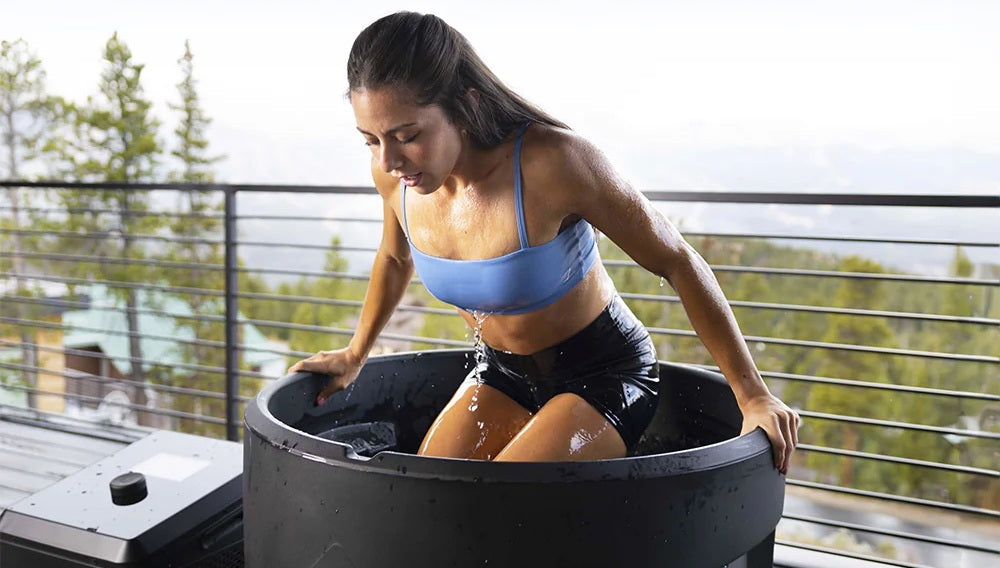
Works through deliberate cold exposure. The discomfort is part of it — there's something real about doing something hard that you don't want to do, and the feeling when you're done. Beyond the mental side, cold water immersion supports recovery by helping manage inflammation and promoting the kind of physical reset that's hard to replicate any other way.
Red light therapy
Panels deliver targeted wavelengths of light directly to the skin and tissue. They're typically used for recovery, skin health, and general wellness support. The full Core Human Health red light panel collection includes multiple panel sizes to fit different room configurations and budget ranges.
You don't need all three to start. But knowing what each one does helps you figure out which to add first.
How to Stack Your Modalities Without Overwhelming Yourself
A lot of people get excited, try to build everything at once, and end up overwhelmed or under using what they bought. Start with the one modality that addresses your most immediate need, and leave room to grow.
A common starting sequence looks like this: infrared sauna first (high daily-use value, broad wellness benefits, anchor piece of most home setups), cold plunge second (pairs naturally with sauna for contrast therapy), red light third (layered in as a targeted add-on). This isn't a rule, it's a general framework. Your personal recovery goals, your space, and your budget all shape the right order for you.
Contrast therapy — alternating heat and cold — is where a lot of people find their rhythm. Sauna to cold plunge and back. The protocol is flexible. Some people do three rounds. Some do one long sauna session followed by a single cold plunge. The specifics matter less than the consistency.
Designing Your Space for Daily Use
The biggest thing most people overlook when planning a home wellness setup is daily usability. A beautiful sauna shoved in a corner of the basement that requires moving boxes to access is a sauna you won't use. Design for the habit, not just the hardware.
A few things to think through before you buy:
- Clearance and layout - Most infrared saunas need a few inches of clearance on all sides for proper ventilation. Plan for that before the delivery truck shows up.
- Electrical requirements - Infrared saunas typically need a dedicated 120V or 240V circuit depending on the model. Cold plunge chillers need their own outlet too. Confirm your electrical setup before you finalize any order.
- Flooring - Cold plunge drains matter. If your space doesn't have a floor drain, you'll want to plan for water management before installation.
- Proximity - If you want to do contrast therapy, keeping your sauna and cold plunge within a few steps of each other makes the practice sustainable. Long walks between the two in a cold room are a friction point.
Core Human Health walks through space planning as part of the purchase conversation, it's not just about picking a product. It's about making sure the product actually works in your home.
What 'Vetted' Actually Means When You're Choosing Equipment
It's more of a curated place to go and say, this has been vetted, it's a great product. Not like: here's 50, go find one.
That distinction matters more than it might seem. The wellness equipment space has a lot of products that look premium, price like premium, and perform like anything but. Warranties get buried in fine print. Customer support disappears after the sale. Replacement parts are unavailable within two years.
Core Human Health carries brands that meet a higher bar: Sunlighten, Ice Barrel, Leil®, Finnmark, SaunaLife, and EchoWater, among others. These are brands with real track records, real research, and real post-purchase support. Being an authorized dealer isn't just a credential, it means the warranty is actually valid, the pricing is legitimate, and there's someone to call if something goes wrong after delivery.
The catalog stays intentionally small. Every product that's in it has earned its place. That's the whole filter.
Starting Small and Building Your Recovery Stack Over Time
Longevity starts at the core and so does a good recovery stack. You don't have to arrive with the full setup on day one. The people who get the most out of their home wellness investment are usually the ones who started with one well-chosen piece, used it consistently, and added from there.
Start with what you'll actually use. Be honest about your space, your routine, and your goals. Get guidance on the product selection before you buy, not after. Core Human Health offers concierge-level support through the entire process: product selection, space planning, freight and delivery logistics, and post-purchase setup. The goal is to make sure you end up with something that fits your life, not just something that ships fast.
The conversation is low-pressure — it's product guidance, not a sales pitch. Just a straightforward walkthrough of what makes sense for where you are right now.