What the Research Actually Says About Red Light Therapy
What the Research Actually Says About Red Light Therapy
Red light therapy has become one of the most over-marketed and most under-explained categories in wellness. The same week, you can find a creator claiming it will reverse aging, optimize hormones, and rebuild your gut, and a skeptic saying it does nothing at all. The truth lives somewhere quieter, somewhere in the published research, where the evidence is strong in some places, mixed in others, and still early in many.
This post is for the buyer who wants the actual landscape. Not the marketing version, and not the dismissive version. By the end, you will know how red light therapy works at a mechanistic level, where the published evidence is genuinely meaningful, where it is still developing, what to look for when you vet a panel, and which one I would put in my own house. None of what follows is personal medical guidance. Any specific health question belongs with your own care team.
The Quick Verdict, for Skimmers
If you only read one paragraph, this is the one.
• The research base on red light therapy is real and growing. It is strongest for skin (collagen production, wound healing context) and musculoskeletal recovery, and there is meaningful in-vitro evidence for mitochondrial markers.
• It is still early for many of the more aggressive longevity, neurological, and metabolic claims you will see on social media. Some have promising preliminary data. None of them are settled science.
• Wavelength, intensity, distance from the panel, and session duration all change what a session actually delivers. Most home users underdose, and most marketing copy oversimplifies. A real panel and a real protocol matter more than the brand on the box.
Keep reading for the full picture, including the strongest published evidence categories and the ones that get oversold.
How Red Light Actually Works
This is the part most articles either skip or fumble. It matters because once you understand the mechanism, you can read marketing copy more accurately, and you can tell the difference between a claim that is grounded in the research and a claim that is reaching.
The Mechanism: Photobiomodulation
Red and near-infrared light wavelengths penetrate the skin and are absorbed by chromophores inside the cell, most notably cytochrome c oxidase, an enzyme that sits inside the mitochondria. The published mechanism research suggests this absorption influences mitochondrial activity, including ATP production and signaling pathways related to oxidative stress and inflammation at the cellular level.
In plain English: red light is one of the few non-invasive inputs that interacts directly with the energy-production machinery inside your cells. That is the foundation under almost every other claim in the category, and it is the most well-supported part of the science.
Wavelengths Matter More Than You Think
Red light therapy panels typically emit two wavelength bands. Red light, roughly 630 to 700 nanometers, penetrates the skin shallowly and is most associated with the skin and surface tissue research base. Near-infrared light, roughly 700 to 1100 nanometers, penetrates deeper and is what most of the recovery, musculoskeletal, and deeper-tissue research is built on.
A panel that only delivers one band is doing half the job. A panel that delivers both, ideally in a clinically referenced ratio, is what the strongest research protocols actually use. This is one of the spec sheets that separates serious equipment from decorative LED panels.
Where the Research Is Genuinely Strong
These are the categories where the peer-reviewed evidence is the most consistent and the most replicated. None of this is a personal medical promise. It is a snapshot of where the published literature is most developed.
Skin and Wound Healing Context
The body of research on red light therapy and skin is the oldest and most established part of the category. Studies on collagen production, fine line appearance, and wound healing context have been accumulating for decades, with much of the early dermatology research dating back to applications first explored in clinical settings. This is the category where the benefits are most predictable and the protocols are most standardized.
Musculoskeletal Recovery
The published research on near-infrared light and post-exercise recovery is meaningful and growing. Studies have examined effects on delayed-onset muscle soreness, perceived recovery quality, and certain biomarkers of muscle damage. This is the category athletes have been quietest about and most consistent about for years, which is part of why you see red light panels in professional training facilities.
Mitochondrial Markers, In Vitro
The cellular-level research on photobiomodulation and mitochondrial function is robust at the in-vitro level. The published evidence on cytochrome c oxidase activity, ATP production, and oxidative stress markers in cell culture is what gives the broader category its scientific foundation. Translating that cellular-level evidence into specific outcomes in living humans is harder, and the research community is still doing that work.
Where the Research Is Still Early
This is the section most red light therapy marketing skips. It is also the section that builds long-term trust with the buyer. The honest answer about where this category is heading is that many of the most exciting claims have preliminary data, and preliminary data is not the same as settled science.
Hormonal and Metabolic Claims
Claims about red light therapy and thyroid function, testosterone, or metabolic outcomes are increasingly common in the marketing copy. The published research on these specific applications is much earlier than the marketing suggests. There are interesting preliminary findings. There is not yet a settled clinical consensus. If you see a panel marketed around hormone claims, that is a signal to read carefully.
Neurodegenerative and Cognitive Claims
Transcranial photobiomodulation research is an active and genuinely interesting area of study, with early work in cognitive performance, mood, and certain neurodegenerative conditions. Most of it is still in early-stage clinical research. Some of it looks promising. None of it is yet at the point where a home red light panel can be recommended on this basis specifically.
Weight Loss and Body Composition
The claims you will see on social media about red light therapy and fat loss outrun the evidence. There is some research on localized adipose tissue and infrared exposure, but the magnitude and durability of the effects are nothing like what the marketing suggests. If a panel is marketed primarily around fat loss, that is a category fit problem, not an equipment recommendation.
Hair, Joints, and Specific Conditions
There is real research in some of these areas, including studies on certain types of hair growth and joint comfort outcomes. The evidence is mixed, and the protocols that produced positive findings are often more specific than the ones being marketed. Anyone considering red light therapy for a specific health condition should bring the conversation to their own care team.
What to Look For in a Real Panel
Once you understand the mechanism, the spec sheet starts telling you the truth. Three things matter most.
Wavelength Mix and Output
A serious panel publishes the wavelengths it emits and the irradiance at standard distances. Look for both red and near-infrared bands, in a meaningful mix, with the irradiance measurements published. Brands that will not share these numbers are usually hoping you do not know to ask.
Build Quality and Heat Management
LED panels run hot. Quality cooling and quality drivers determine whether the panel performs the way it did on day one, three years in. Cheaper units cut corners here, and the result shows up as wavelength drift, output decline, or outright failure. The build is the part most marketing copy will never address.
EMF and Flicker
Like infrared sauna panels, red light panels produce electromagnetic fields, and many produce a flicker rate that can affect light-sensitive users. The best brands publish independent third-party data on both. The willingness to publish that data is one of the quickest ways to filter the serious manufacturers from the rest of the field.
What I Would Actually Put in My House
This is the part of the post that exists because I built Core Human Health to be a curated catalog, not a retail wall.
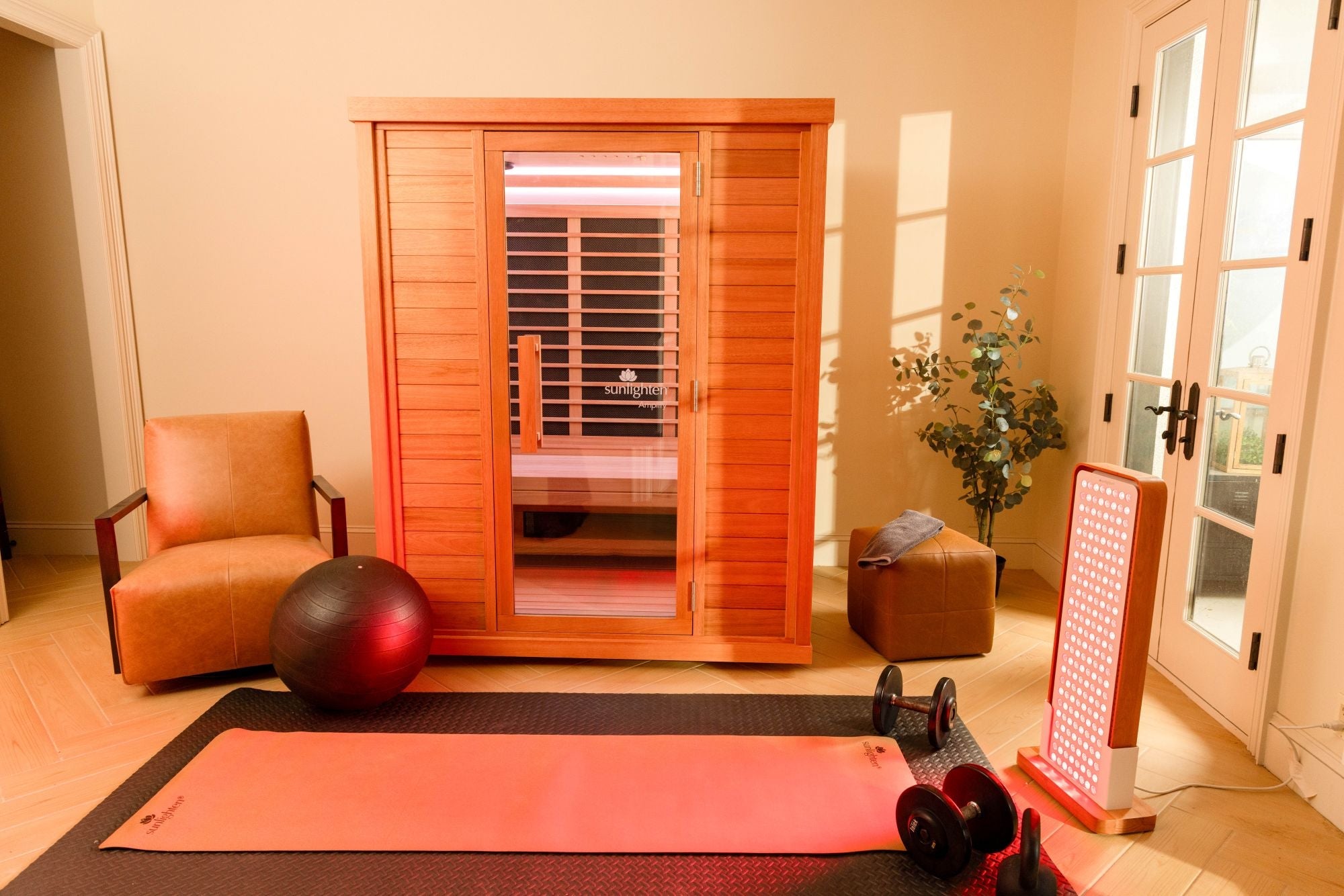
For most of the buyers I talk to, the cleanest red light therapy entry point is not a standalone panel at all. It is a full-spectrum infrared sauna from Sunlighten, which layers near-infrared and red light therapy into the same session. You get two modalities in one cabin, with no extra equipment to maintain or store. Sunlighten is my best brand for infrared saunas and red light therapy, and Core Human Health is one of a very small handful of authorized Sunlighten dealers in North America.
If you want a dedicated red light panel because you are working a specific protocol or want the option to use red light independently of a sauna session, the equipment selection matters more than the brand name on the box. The questions to ask are the ones above. Wavelength mix, published irradiance, build quality, third-party EMF and flicker data. The consult call is a fifteen-minute conversation where I can walk you through which option fits your space, your goals, and your timeline.
Most home wellness equipment in our catalog ships within a few days when in stock, and typically arrives within about two weeks.
Bringing It All Together
Heat. Cold. Light. Discipline. Light is one of the four modalities the catalog is built around, and red light therapy is the modality most likely to be either oversold or dismissed depending on who is writing about it that week. The honest version sits in between. The research base is real. The most aggressive claims outrun it. The buyer who understands both will make a better decision than the buyer who only sees the marketing or only sees the skepticism.
If you want to talk it through, that is exactly the conversation we are built for. I do not run a sales script. I do not push you toward a model that does not fit. I answer the question you actually have, with the catalog in front of me and your protocol in mind.
Book a 15-minute consult call, or reply directly. I read every message that comes in.
OUR APPROACH AT CORE HUMAN HEALTH
At Core Human Health, we don’t believe in one-size-fits-all wellness. That’s why our sauna collection is intentionally curated to include both traditional and infrared options, each selected for build quality, performance, and long-term value.
Our goal is simple:
to help you choose the sauna that best supports your body, your space, and your lifestyle, today and for years to come.